

Buick
1.4 LUJ Turbo
Explore technical details, engine specifications and compatibility guidance.
View engine detailsBuick engine reference, technical information and compatible-model notes. Discover the engine before requesting a quotation.
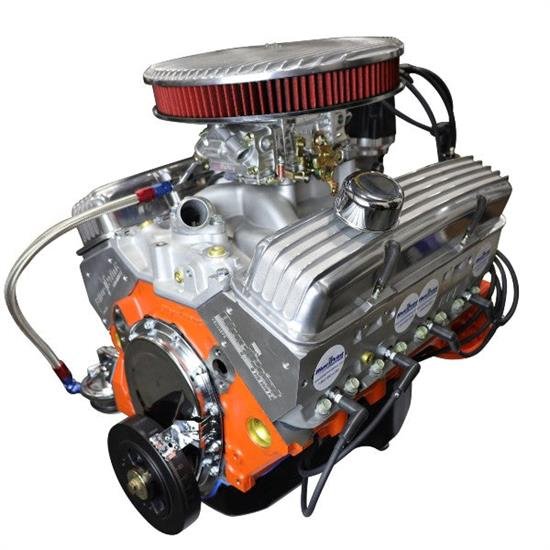 Original Buick 215 cubic-inch aluminum V8 engine for classic vehicle restoration and replacement applications.
If you are searching for a Buick 215 engine for sale, the Buick 215 aluminum V8 is a notable option for classic vehicle restoration, vintage Buick projects, and custom engine applications. Originally developed by Buick in the early 1960s, this compact V8 engine is recognized for its lightweight aluminum construction and distinctive engineering design.
The Buick 215 features approximately 215 cubic inches (3.5 liters) of displacement and an eight-cylinder configuration. Its relatively compact dimensions and aluminum engine block make it particularly interesting to classic car enthusiasts looking for an original replacement engine or a suitable foundation for a restoration project.
Whether you need a complete Buick 215 V8 engine, a rebuildable engine assembly, or a replacement for an existing powerplant, confirming the engine's condition, production year, specifications, and compatibility is essential before purchasing.
The Buick 215 was designed as a lightweight, 90-degree V8 with overhead valves (OHV), an aluminum cylinder block and aluminum cylinder heads. It uses cast-iron cylinder liners and a carbureted fuel delivery system.
Its factory specifications vary depending on the production year, carburetor configuration, compression ratio, and original vehicle application.
The Buick 215 uses a traditional 90-degree V8 configuration, with four cylinders on each bank. Its overhead-valve design and compact aluminum construction distinguish it from many contemporary cast-iron V8 engines.
The engine's aluminum construction helps reduce overall weight, making it attractive for classic vehicle restorations and performance-oriented conversion projects.
The engine has a displacement of approximately 215 cubic inches, equivalent to 3.5 liters.
Its original bore and stroke measurements are:
Bore: 3.50 inches
Stroke: 2.80 inches
This displacement provides a compact V8 platform suitable for applications where engine size and weight are important considerations.
The Buick 215 was designed to operate on gasoline (petrol). Original factory versions used carburetor-based fuel delivery rather than modern electronic fuel injection.
Depending on the engine specification, the original configuration included either a two-barrel or four-barrel carburetor.
The Buick 215 is naturally aspirated. It draws air into the engine through its carburetor without a factory turbocharger or supercharger.
The naturally aspirated configuration makes it important to verify the original intake manifold, carburetor arrangement, and associated components when purchasing a replacement engine.
The Buick 215 was available in different factory performance configurations.
Factory configuration | Horsepower |
|---|---|
Standard two-barrel version | 155 HP |
Higher-output four-barrel version | 185 HP |
1963 higher-output version | 200 HP |
These are historical factory gross horsepower ratings, not modern SAE net horsepower figures. Actual performance depends on engine condition and specification.
Torque output also varied according to the original engine configuration.
Standard 155 HP version: approximately 220 lb-ft in the 1962 factory specification.
Higher-output 185 HP version: approximately 230 lb-ft.
Higher-output 1963 version: approximately 240 lb-ft.
These figures are factory-period ratings and should not be assumed for an unknown used or rebuilt engine.
Over-Drive Magazine+2
The Buick 215 aluminum V8 belongs to the early-1960s generation of Buick compact V8 engines.
Its original production applications covered the 1961, 1962, and 1963 model years.
The engine was associated with the Buick Special and Skylark, with different power configurations depending on model year and equipment.
Although the Buick 215 is relatively compact, installation requirements differ between vehicles.
Check the following before purchasing:
Engine mounting brackets.
Engine mount positions.
Oil pan clearance.
Exhaust manifold clearance.
Radiator and cooling system connections.
Intake manifold and carburetor clearance.
Accessory and pulley arrangements.
An important consideration when searching for a Buick 215 engine for sale is the difference between Buick and Oldsmobile 215 engines.
Although both engines share the same basic displacement and general aluminum V8 architecture, they have important differences in cylinder heads, valve covers, and other engine components.
The Oldsmobile version should not automatically be considered interchangeable with the Buick version.
Pontiac also offered a version of the Buick-designed 215 in early Tempest applications. Engine identification is therefore important when purchasing an engine advertised simply as a GM 215.
britishv8.org+1
Finding the right Buick 215 engine involves more than confirming displacement. Buyers should establish the engine's identity, completeness, and mechanical condition.
Consider these important purchasing checks:
Engine identification: Verify the block stamping, production year, and original engine specification.
Block condition: Inspect the aluminum block and cylinder liners for damage, corrosion, and previous repairs.
Cylinder heads: Check for cracks, damage, and signs of previous overheating.
Crankshaft condition: Inspect journals and bearing surfaces where possible.
Compression condition: Request compression or leak-down test results if the engine is assembled.
Internal components: Establish whether the pistons, connecting rods, camshaft, and timing components are included.
External components: Confirm whether the carburetor, intake manifold, distributor, water pump, starter, and accessories are included.
Rebuild history: Ask whether the engine is original, rebuilt, refurbished, or currently in running condition.
Buyers should also establish whether the engine is supplied as a complete assembly, a long block, a short block, or a rebuildable core.
When considering a Buick 215 engine for sale, buyers may encounter different engine conditions.
Engine type | Description | Suitable application |
|---|---|---|
Complete running engine | Assembled engine that runs | Replacement and restoration |
Rebuilt engine | Engine that has undergone internal refurbishment | Restoration and replacement |
Long block | Block, cylinder heads, and internal valve-train components assembled | Engine replacement projects |
Short block | Engine block with crankshaft, pistons, and rotating assembly | Custom engine rebuilding |
Rebuildable core | Used engine requiring inspection and rebuilding | Restoration and parts recovery |
Always confirm exactly what is included in the sale because product descriptions and seller terminology can differ.
The Buick 215 remains an interesting engine for classic automotive enthusiasts for several reasons.
Lightweight aluminum construction: Its aluminum block and cylinder heads offer a weight advantage over many traditional cast-iron V8 engines.
Classic Buick engineering: The engine represents an important period in Buick's early-1960s engine development.
Compact V8 configuration: Its relatively small physical dimensions make it worth considering for selected restoration and engine conversion projects.
Restoration potential: Original Buick 215 engines are relevant to enthusiasts restoring compatible Buick Special and Skylark vehicles.
Historical significance: The GM 215 aluminum V8 design also became the foundation for the later Rover V8 engine family, although the later engines should not be confused with an original Buick 215.
Specifications are reference information, may differ by production year, market and engine suffix, and are not an offer of an engine in stock.
Potential original applications include:
1961 Buick Special
1961 Buick Skylark
1962 Buick Special
1962 Buick Skylark
1963 Buick Special
1963 Buick Skylark
Specification | Buick 215 V8 |
|---|---|
Engine configuration | 90-degree V8 |
Engine displacement | 215 cubic inches (3.5L) |
Cylinder arrangement | 8 cylinders in V configuration |
Engine block material | Aluminum alloy |
Cylinder head material | Aluminum alloy |
Cylinder liners | Cast iron |
Valve configuration | OHV (overhead valve) |
Fuel type | Gasoline / Petrol |
Fuel delivery | Carburetor |
Aspiration / induction | Naturally aspirated |
Bore | 3.50 inches |
Stroke | 2.80 inches |
Cooling system | Liquid-cooled |
Ignition system | Distributor-based |
Years / generation | 1961–1963 |
Original applications | Buick Special and Skylark |
Before purchasing a Buick 215 engine, it is important to establish whether the engine is compatible with your vehicle's original configuration.
The Buick 215 was originally associated with several General Motors vehicle applications, but not every 215 engine is a direct replacement for every vehicle using this displacement.
Potential original applications include:
1961 Buick Special
1961 Buick Skylark
1962 Buick Special
1962 Buick Skylark
1963 Buick Special
1963 Buick Skylark
Verify the original engine option and vehicle identification details before ordering.
The Buick 215 was originally offered with manual and automatic transmission configurations, depending on the vehicle.
When replacing an existing engine, check:
Transmission bellhousing compatibility.
Flexplate or flywheel requirements.
Crankshaft and transmission interface.
Engine mounting locations.
Starter motor positioning.
Transmission clearance.
A replacement engine may require additional components or modifications depending on the vehicle and transmission combination.
Explore technical details, engine specifications and compatibility guidance.
View engine detailsExplore technical details, engine specifications and compatibility guidance.
View engine detailsExplore technical details, engine specifications and compatibility guidance.
View engine detailsIf you are searching for a Buick 215 engine for sale, the Buick 215 aluminum V8 is a notable option for classic vehicle restoration, vintage Buick projects, and custom engine applications. Originally developed by Buick in the early 1960s, this compact V8 engine is recognized for its lightweight aluminum construction and distinctive engineering design.
The Buick 215 features approximately 215 cubic inches (3.5 liters) of displacement and an eight-cylinder configuration. Its relatively compact dimensions and aluminum engine block make it particularly interesting to classic car enthusiasts looking for an original replacement engine or a suitable foundation for a restoration project.
Tell us what you're looking for. We'll use your engine code or VIN details to review compatibility.