

Buick
1.4 LUJ Turbo
Explore technical details, engine specifications and compatibility guidance.
View engine detailsBuick engine reference, technical information and compatible-model notes. Discover the engine before requesting a quotation.
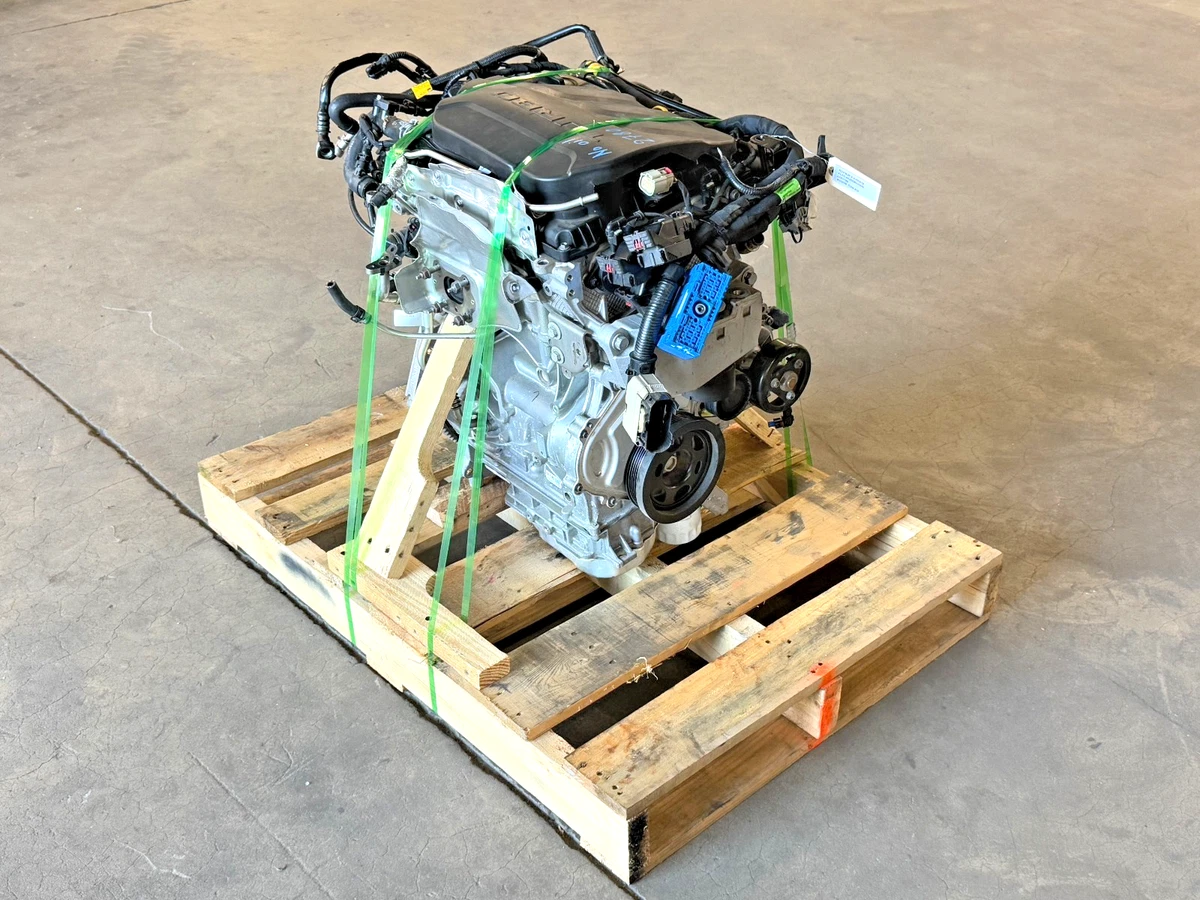 Buick 300 V8 engine for sale
If you are searching for a Buick 300 engine for sale, finding the right engine involves more than matching the Buick name or engine displacement. You need to consider engine configuration, vehicle compatibility, production years, fuel system, power output, torque, and installation requirements.
The Buick 300 is a classic American V8 engine known for its compact design and use in several Buick passenger cars during the 1960s. Whether you are replacing an original engine, restoring a classic Buick, or looking for a V8 engine for a custom project, understanding its specifications and fitment requirements can help you make a more informed purchase.
This guide covers Buick 300 engine specifications, compatibility, applications, and important considerations when buying a replacement or used engine.
The Buick 300 V8 belongs to Buick's small-block V8 engine family. It was introduced for the 1964 model year and remained in production through 1967.
Its relatively compact dimensions and traditional overhead-valve design make it an interesting option for classic Buick restorations and compatible custom-engine projects.
The Buick 300 is a 90-degree V8 engine featuring an overhead-valve design and eight cylinders arranged in two banks.
Its original design was closely related to Buick's 215 cubic-inch V8 engine. The 300 retained the compact architecture while increasing displacement through a larger bore.
Early Buick 300 engines featured aluminum cylinder heads and an aluminum intake manifold, contributing to their relatively low weight. For 1966, Buick changed to cast-iron cylinder heads.
This distinction is important when sourcing a replacement engine because early and later Buick 300 assemblies can have different component specifications.
The engine has a displacement of approximately 300.4 cubic inches, equivalent to 4.9 liters.
Its factory bore and stroke measurements are:
Bore: 3.75 inches.
Stroke: 3.40 inches.
The 300 cubic-inch displacement provides a balance between engine size and usable V8 performance. It also distinguishes the engine from the related Buick 340, which was introduced in 1966 with an increased stroke and taller block.
When shopping for a Buick 300 engine for sale, verify the actual displacement rather than relying only on an advertisement's description. A Buick 340 or 350 may look similar in some respects but is not the same engine.
The Buick 300 V8 was designed to operate on gasoline.
Its original fuel delivery system used a carburetor, with factory configurations including two-barrel and four-barrel carburetion, depending on production year and engine specification.
When purchasing a used engine, check whether the following components are included:
Original carburetor.
Intake manifold.
Fuel pump.
Fuel lines and fittings.
Air cleaner assembly.
An advertised complete engine may not include every original fuel-system component. Confirm the seller's inventory before completing your purchase.
The Buick 300 uses naturally aspirated induction. It does not require a turbocharger or supercharger for its original factory configuration.
Its carbureted fuel system supplies the air-fuel mixture through the intake manifold.
Factory configurations included:
Two-barrel carburetor applications.
Four-barrel carburetor applications on earlier high-output versions.
The four-barrel configuration offered higher factory-rated power than the standard two-barrel version. When buying, check whether the engine retains its original induction components or has been modified.
Factory power ratings for the Buick 300 varied according to carburetor configuration and production year.
Engine version | Approximate factory horsepower |
|---|---|
300 V8, two-barrel | 210 hp |
300 V8, four-barrel | 250 hp |
These are historical gross horsepower ratings, not modern net horsepower measurements. Actual performance from an existing engine depends on its mechanical condition, internal components, compression and tuning.
Wikipedia+1
Torque is another important consideration when evaluating a Buick 300 engine for a classic-car restoration.
The original factory ratings were approximately:
Engine version | Factory-rated torque |
|---|---|
Two-barrel Buick 300 | 310 lb-ft |
Four-barrel Buick 300 | 355 lb-ft |
These figures represent historical factory ratings and can vary with the exact engine specification.
For a replacement engine, consider having the compression, oil pressure and internal condition checked before installation.
The Buick 300 V8 was produced for the 1964–1967 model years.
Model year | Engine availability and notable details |
|---|---|
1964 | Introduced with two-barrel and four-barrel configurations |
1965 | Continued production, including high-output versions |
1966 | Continued production; cast-iron cylinder heads introduced |
1967 | Final production model year for the Buick 300 |
The Buick 300 was subsequently replaced by the Buick 350 in the company's small-block V8 lineup for 1968.
1975+2
Buying a classic engine requires careful inspection, particularly when purchasing a used or rebuilt unit. Before committing to a Buick 300 engine for sale, request the following information from the seller:
Engine identification: Confirm that the engine is genuinely a Buick 300 V8 and check its identification code.
Engine condition: Establish whether it is used, rebuilt, remanufactured or an untested core.
Compression test: Request cylinder compression results where available.
Oil pressure: Ask whether the engine has been tested for oil pressure.
Internal condition: Check for unusual engine noises, excessive wear, corrosion and signs of previous overheating.
Included components: Establish whether the carburetor, intake manifold, distributor, alternator and other accessories are included.
Shipping arrangements: Confirm packaging, shipping costs, delivery arrangements and return conditions.
For an engine that has not been tested, request clear photographs and an honest description of its condition. Do not assume that an engine advertised as complete is ready for immediate installation.
Finding an original Buick 300 V8 can require some research because these engines are no longer in regular production. Availability depends on the condition, originality and location of the engine.
Potential sources include:
Classic Buick engine specialists.
Vintage automotive salvage yards.
Classic car restoration businesses.
Online classic engine marketplaces.
Private sellers and Buick enthusiast communities.
Engine rebuilding and remanufacturing companies.
When comparing listings, consider the engine's identification, completeness, mechanical condition and compatibility rather than choosing exclusively on price.
If originality matters for your restoration, ask whether the engine retains its factory-style components and whether its identification matches the intended vehicle and production year.
1. What years was the Buick 300 engine manufactured?
The Buick 300 V8 was manufactured for the 1964 through 1967 model years.
2. How much horsepower does a Buick 300 engine produce?
Factory gross horsepower ratings were approximately 210 hp for the two-barrel version and 250 hp for the earlier four-barrel version.
3. Is the Buick 300 a V8 engine?
Yes. It is a naturally aspirated, 90-degree V8 gasoline engine with an overhead-valve configuration.
4. What is the displacement of the Buick 300?
Its displacement is approximately 300.4 cubic inches, equivalent to 4.9 liters.
5. Does the Buick 300 use a carburetor?
Yes. Original Buick 300 engines used carbureted fuel delivery, with two-barrel and four-barrel configurations depending on the year and specification.
6. Can a Buick 300 replace a Buick 350?
Not necessarily as a direct replacement. Although both belong to Buick's small-block V8 family, they have differences in displacement, block dimensions and components. Check mounting, transmission compatibility, accessories and vehicle clearance before attempting an interchange.
7. Is the Buick 300 engine suitable for a classic car restoration?
It can be a suitable choice for restoring a compatible classic Buick, particularly when maintaining a period-correct engine configuration is important. Confirm the original vehicle's engine specification before purchasing.
Whether you need a Buick 300 V8 for a complete restoration, an original-engine replacement or a compatible custom automotive project, selecting the correct engine specification is essential.
Before ordering, confirm the engine's production year, identification code, carburetor configuration, mechanical condition and included components. These details can help prevent compatibility problems and unexpected restoration costs.
A properly identified and inspected Buick 300 engine can be a valuable addition to a classic Buick project.
Specifications are reference information, may differ by production year, market and engine suffix, and are not an offer of an engine in stock.
If you are purchasing a Buick 300 engine, compatibility should be one of your first considerations. Although this engine was designed for Buick vehicles of the 1960s, not every Buick model or engine installation uses identical mounting arrangements and accessories.
The Buick 300 V8 was associated with applications including:
1964–1967 Buick Special: A factory application for the Buick 300 V8.
1964–1967 Buick Skylark: Available with the 300 V8 in applicable configurations.
Apollo 5000 GT / Vetta Ventura: A specialist sports-car application that used the Buick 300 V8.
Specification | Buick 300 V8 |
|---|---|
Engine configuration | 90-degree V8 |
Engine displacement | 300.4 cubic inches (4.9L) |
Fuel type | Gasoline |
Aspiration / induction | Naturally aspirated |
Fuel delivery | Carbureted |
Valvetrain | OHV (overhead valve) |
Bore | 3.75 inches |
Stroke | 3.40 inches |
Cylinder arrangement | 8 cylinders |
Power output | Approximately 210–250 hp, depending on version |
Torque | Approximately 310–355 lb-ft, depending on version |
Production years | 1964–1967 |
If you are purchasing a Buick 300 engine, compatibility should be one of your first considerations. Although this engine was designed for Buick vehicles of the 1960s, not every Buick model or engine installation uses identical mounting arrangements and accessories.
The Buick 300 V8 was associated with applications including:
1964–1967 Buick Special: A factory application for the Buick 300 V8.
1964–1967 Buick Skylark: Available with the 300 V8 in applicable configurations.
Apollo 5000 GT / Vetta Ventura: A specialist sports-car application that used the Buick 300 V8.
Before purchasing, compare the following:
Engine block identification and casting numbers.
Engine mounting brackets and mounting locations.
Transmission bellhousing compatibility.
Crankshaft and flywheel or flexplate configuration.
Oil pan clearance and chassis arrangement.
Exhaust manifold positioning.
Intake manifold, carburetor and accessory configuration.
Cooling system and radiator connections.
Important: A Buick 300 is not automatically a direct replacement for every Buick 300, 340 or 350 installation. Differences in engine components, production years and vehicle configurations can affect interchangeability. Confirm the engine identification and physical measurements before ordering.
Explore technical details, engine specifications and compatibility guidance.
View engine detailsExplore technical details, engine specifications and compatibility guidance.
View engine detailsExplore technical details, engine specifications and compatibility guidance.
View engine detailsIf you are searching for a Buick 300 engine for sale, finding the right engine involves more than matching the Buick name or engine displacement. You need to consider engine configuration, vehicle compatibility, production years, fuel system, power output, torque, and installation requirements.
The Buick 300 is a classic American V8 engine known for its compact design and use in several Buick passenger cars during the 1960s. Whether you are replacing an original engine, restoring a classic Buick, or looking for a V8 engine for a custom project, understanding its specifications and fitment requirements can help you make a more informed purchase.
Tell us what you're looking for. We'll use your engine code or VIN details to review compatibility.