

Buick
1.4 LUJ Turbo
Explore technical details, engine specifications and compatibility guidance.
View engine detailsBuick engine reference, technical information and compatible-model notes. Discover the engine before requesting a quotation.
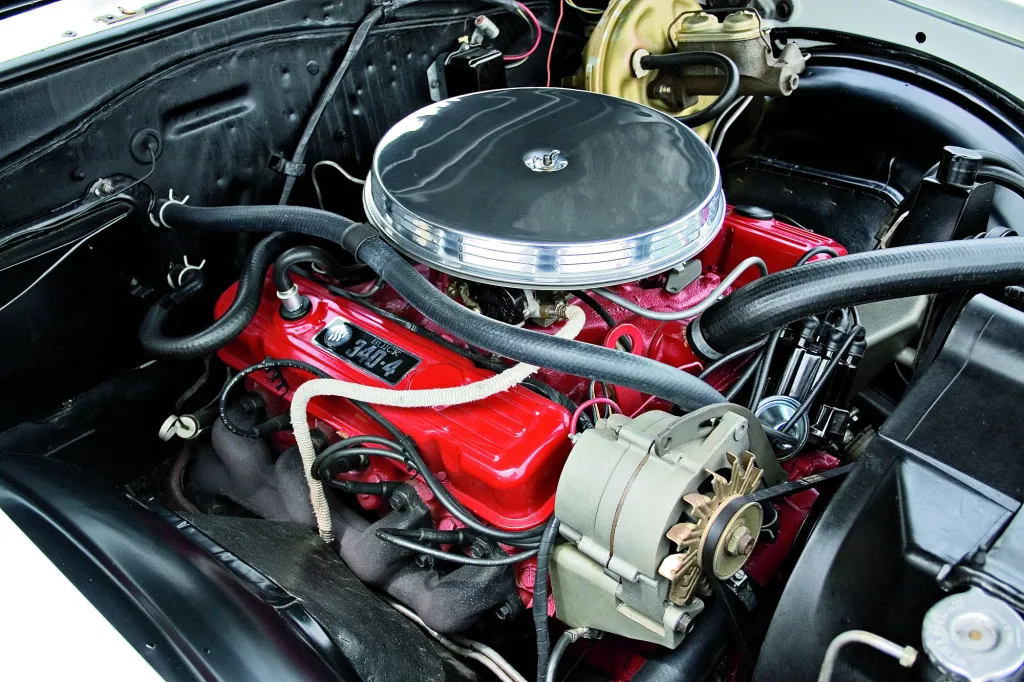 Buick 340 engine for sale
If you are searching for a Buick 340 engine for sale, finding the right engine involves more than matching the displacement. You need to consider the engine's original application, model year, mounting configuration, transmission compatibility, fuel system, and overall condition.
The Buick 340 is a classic 5.6-liter V8 engine developed for selected Buick passenger cars during the late 1960s. Known for its traditional American V8 design, this engine is an interesting option for classic Buick restoration projects, original-specification replacements, and period-correct performance builds.
Whether you are replacing a worn-out engine, completing a classic car restoration, or sourcing a Buick 340 motor for a custom project, understanding its specifications and fitment requirements can help you make a more informed purchasing decision.
The Buick 340 belongs to Buick's small-block V8 engine family. It was introduced for the 1966 model year and continued through 1967 before being replaced by the Buick 350 V8 in 1968.
Its increased stroke compared with the Buick 300 produced a displacement of approximately 340 cubic inches (5.6 liters), giving it a torque-oriented design suited to classic American passenger cars.
Wikipedia+1
Engine configuration
90-degree V8
Displacement
340.2 cu. in. / 5.6L
Engine type
Naturally aspirated
Fuel type
Gasoline
Cylinder arrangement
V-shaped, 8 cylinders
Production years
1966–1967
Factory power ratings
Specification | 2-barrel | 4-barrel |
|---|---|---|
Horsepower | 220 hp | 260 hp |
Torque | 340 lb-ft | 365 lb-ft |
Compression ratio | 9.0:1 | 10.25:1 |
Carburetor | 2-barrel | 4-barrel |
Factory gross ratings. Exact specifications depend on engine version and year.
teambuick.com+1
The Buick 340 V8 was designed for selected Buick passenger cars from the 1966 and 1967 model years. It is particularly relevant to buyers restoring original Buick A-body vehicles or sourcing a replacement for an existing 340-powered car.
Potential applications to investigate include:
1966 Buick Special
1966 Buick Skylark
1967 Buick Special
1967 Buick Skylark
Selected 1966–1967 Buick Sportwagon applications
Important compatibility considerations:
Before purchasing a Buick 340 engine, verify the original engine identification code, engine mounts, transmission bellhousing compatibility, exhaust manifold configuration, oil pan clearance, accessory brackets, and cooling system connections.
The 340 is not automatically interchangeable with every Buick 300 or 350 engine. Although these engines share elements of their design, the 340 uses a taller deck block and a different intake manifold arrangement.
Wikipedia+2
For an accurate replacement, compare the donor engine with the original vehicle's engine code and factory specifications.
The Buick 340 features a traditional 90-degree V8 configuration with an overhead-valve (OHV) design. It has eight cylinders arranged in two banks of four, with a cast-iron cylinder block and cylinder heads.
Its bore and stroke measurements are:
Bore: 3.750 inches
Stroke: 3.850 inches
Displacement: 340.2 cubic inches
Firing order: 1-8-4-3-6-5-7-2
The longer stroke compared with the Buick 300 contributes to the 340's increased displacement and torque characteristics.
teambuick.com+1
The Buick 340 has a factory displacement of approximately 340.2 cubic inches, equivalent to 5.6 liters or 5,574 cc.
This displacement was achieved by retaining the 3.75-inch bore of the Buick 300 while increasing the stroke from 3.40 inches to 3.85 inches.
When shopping for a Buick 340 engine for sale, confirm that the engine is an original 340 rather than a Buick 300 or a later Buick 350. Displacement alone is not sufficient to establish engine identity.
The Buick 340 was designed to operate on gasoline and originally used a carbureted fuel delivery system.
Depending on the factory configuration, it was available with:
Two-barrel carburetor.
Four-barrel carburetor.
The original two-barrel configuration had a lower compression ratio, while the four-barrel version used a higher compression ratio and required the appropriate premium-grade fuel specification.
When purchasing an engine, check whether the carburetor, intake manifold, fuel pump, and associated fuel-system components are included.
The Buick 340 is a naturally aspirated engine. It uses atmospheric air drawn through a carburetor and intake manifold into the cylinders.
It was not factory-equipped with a turbocharger or supercharger.
Its original induction configurations include a two-barrel and a four-barrel carburetor setup. These configurations differ in factory compression ratio, horsepower, and torque ratings.
Buyers seeking an original-specification restoration should identify which induction setup their vehicle requires before ordering.
The Buick 340 was offered with different factory power ratings depending on its carburetor and compression configuration.
The original two-barrel version produced approximately 220 gross horsepower at 4,000 rpm, while the four-barrel version produced approximately 260 gross horsepower at 4,000 rpm.
These factory figures are useful when comparing an advertised replacement engine with original Buick specifications. Actual output from a used engine will depend on its mechanical condition, internal components, compression, carburetor condition, and maintenance history.
teambuick.com+1
Torque is an important characteristic of the Buick 340 V8, particularly for buyers restoring classic American passenger cars.
Factory specifications list:
Two-barrel version: 340 lb-ft at 2,400 rpm.
Four-barrel version: 365 lb-ft at 2,800 rpm.
The engine's longer stroke helps deliver useful low- and mid-range torque.
When purchasing a used Buick 340, inspect the crankshaft, connecting rods, bearings, pistons, and cylinder condition to determine whether the engine is suitable for installation or requires rebuilding.
The Buick 340 was manufactured for two model years:
Model year | Engine availability |
|---|---|
1966 | Buick 340 introduced |
1967 | Buick 340 continued |
1968 | Replaced by Buick 350 V8 |
The 1966 and 1967 engines have different identification codes, so buyers should verify the production year and engine configuration before completing a purchase.
teambuick.com+1
Correct engine identification is essential when purchasing a Buick 340 for restoration or replacement.
The following original engine identification codes can help distinguish the available configurations:
Model year | Engine configuration | Identification code |
|---|---|---|
1966 | 340 V8, 2-barrel | MA |
1966 | 340 V8, 4-barrel | MB |
1966 | 340 V8, low compression | MX |
1967 | 340 V8, 2-barrel | NA |
1967 | 340 V8, 4-barrel | NB |
These codes are useful starting points when checking an engine's originality. Always verify the stamped identification numbers and casting information against the applicable factory documentation.
teambuick.com+1
Finding a suitable Buick 340 engine requires checking its condition, originality, and compatibility with the intended vehicle.
Before purchasing, consider the following:
1. Engine condition
Ask whether the engine is running, rebuilt, partially assembled, or sold as a core engine. Request compression-test results or other available inspection records.
2. Engine identification
Check the engine identification code and casting numbers to establish whether the engine is a genuine Buick 340.
3. Internal components
Where possible, inspect the crankshaft, pistons, connecting rods, cylinder walls, bearings, and cylinder heads.
4. Included components
Confirm whether the engine comes complete with its intake manifold, carburetor, distributor, exhaust manifolds, alternator brackets, starter, and other accessories.
5. Vehicle compatibility
Provide your vehicle's model year, model, transmission type, and existing engine details to the seller. This helps establish whether additional parts or modifications may be required.
6. Shipping and warranty
Ask about packaging, shipping arrangements, return conditions, and any available warranty coverage before ordering.
An original Buick 340 can be a suitable choice for classic Buick owners who want to maintain the original engine configuration of their vehicle.
Its main attractions include:
Period-correct V8 engine design.
Original 340-cubic-inch displacement.
Factory two-barrel and four-barrel configurations.
Classic Buick engineering from the 1960s.
Suitability for appropriate Buick restoration and replacement projects.
Original engine identification codes for restoration verification.
The right engine depends on the vehicle's requirements and whether originality, rebuild potential, or a replacement powerplant is your priority.
Looking for a Buick 340 engine for sale? Whether you need an original 1966 or 1967 engine, a rebuildable engine block, or a complete V8 assembly, confirming the specifications and condition is an important step before purchasing.
When contacting an engine supplier, provide your vehicle's year, model, current engine configuration, and transmission details. Also specify whether you need a complete running engine, a professionally rebuilt unit, or an engine core for restoration.
Request clear photographs, identification numbers, available inspection results, and a detailed list of included components. This will help you compare available Buick 340 engines and select an option that meets your restoration or replacement requirements.
Start your search for a Buick 340 engine today and find the right classic V8 for your Buick project.
Specifications are reference information, may differ by production year, market and engine suffix, and are not an offer of an engine in stock.
The Buick 340 V8 was designed for selected Buick passenger cars from the 1966 and 1967 model years. It is particularly relevant to buyers restoring original Buick A-body vehicles or sourcing a replacement for an existing 340-powered car.
Potential applications to investigate include:
1966 Buick Special
1966 Buick Skylark
1967 Buick Special
1967 Buick Skylark
Selected 1966–1967 Buick Sportwagon applications
Engine configuration-90-degree V8
Displacement-340.2 cu. in. / 5.6L
Engine type-Naturally aspirated
Fuel type Gasoline
Cylinder arrangement V-shaped, 8 cylinders
Production years-1966–1967
Factory power ratings
Specification | 2-barrel | 4-barrel |
|---|---|---|
Horsepower | 220 hp | 260 hp |
Torque | 340 lb-ft | 365 lb-ft |
Compression ratio | 9.0:1 | 10.25:1 |
Carburetor | 2-barrel | 4-barrel |
The Buick 340 V8 was designed for selected Buick passenger cars from the 1966 and 1967 model years. It is particularly relevant to buyers restoring original Buick A-body vehicles or sourcing a replacement for an existing 340-powered car.
Potential applications to investigate include:
1966 Buick Special
1966 Buick Skylark
1967 Buick Special
1967 Buick Skylark
Selected 1966–1967 Buick Sportwagon applications
Important compatibility considerations:
Before purchasing a Buick 340 engine, verify the original engine identification code, engine mounts, transmission bellhousing compatibility, exhaust manifold configuration, oil pan clearance, accessory brackets, and cooling system connections.
The 340 is not automatically interchangeable with every Buick 300 or 350 engine. Although these engines share elements of their design, the 340 uses a taller deck block and a different intake manifold arrangement.
Explore technical details, engine specifications and compatibility guidance.
View engine detailsExplore technical details, engine specifications and compatibility guidance.
View engine detailsExplore technical details, engine specifications and compatibility guidance.
View engine detailsIf you are searching for a Buick 340 engine for sale, finding the right engine involves more than matching the displacement. You need to consider the engine's original application, model year, mounting configuration, transmission compatibility, fuel system, and overall condition.
The Buick 340 is a classic 5.6-liter V8 engine developed for selected Buick passenger cars during the late 1960s. Known for its traditional American V8 design, this engine is an interesting option for classic Buick restoration projects, original-specification replacements, and period-correct performance builds.
Whether you are replacing a worn-out engine, completing a classic car restoration, or sourcing a Buick 340 motor for a custom project, understanding its specifications and fitment requirements can help you make a more informed purchasing decision.
Tell us what you're looking for. We'll use your engine code or VIN details to review compatibility.