

Buick
1.4 LUJ Turbo
Explore technical details, engine specifications and compatibility guidance.
View engine detailsBuick engine reference, technical information and compatible-model notes. Discover the engine before requesting a quotation.
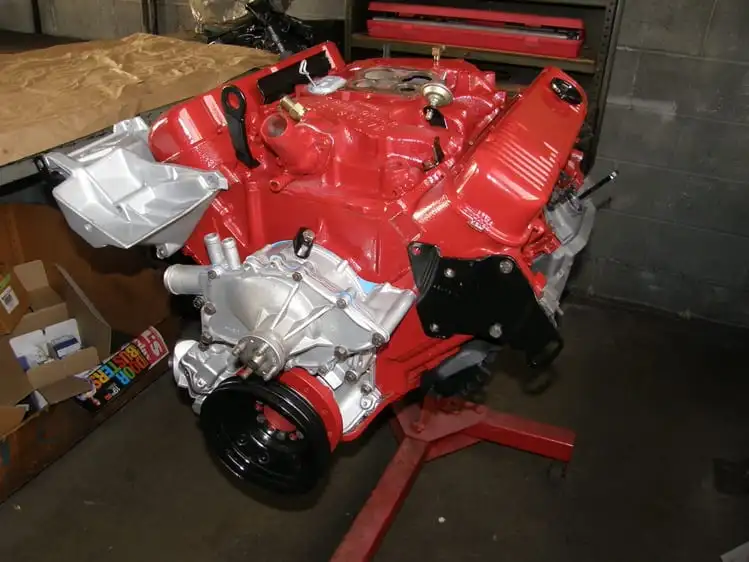 Buick 430 engine for sale
Looking for a Buick 430 engine for sale for your classic Buick restoration, engine replacement, or vintage performance project? The Buick 430 V8 is a classic American gasoline engine recognized for its large displacement, strong factory torque output, and original applications in Buick's full-size luxury and performance vehicles.
Introduced in 1967, the Buick 430 was part of Buick's modern big-block V8 engine family. It was designed to deliver substantial power and torque for larger passenger cars, including the Buick Electra, Riviera, and Wildcat.
With a displacement of 430 cubic inches (approximately 7.0 liters), the engine features a cast-iron block, overhead-valve configuration, and naturally aspirated induction. Its factory four-barrel carbureted configuration was rated at 360 horsepower and 475 lb-ft of torque in the original high-compression specification.
Whether you need a complete running engine, a rebuilt Buick 430, or a rebuildable engine core, understanding its specifications, production years, and vehicle compatibility is essential before purchasing.
The Buick 430 is also different from the Buick 400, Buick 455, Chevrolet 430, and earlier Buick Nailhead engines. Similar displacement or brand names do not automatically indicate interchangeability.
The Buick 430 features a 90-degree V8 configuration with eight cylinders arranged in two banks of four.
Its overhead-valve (OHV) design uses a camshaft, lifters, pushrods, and rocker arms to operate the intake and exhaust valves.
Key engine configuration characteristics include:
90-degree V8 engine architecture.
Cast-iron engine block.
Cast-iron cylinder heads.
Pushrod-operated overhead valves.
Naturally aspirated gasoline induction.
Four-barrel carbureted fuel delivery.
Buick-specific engine block and internal components.
The engine was designed for larger Buick vehicles that required substantial power and torque. Its traditional pushrod V8 construction also makes it a relevant option for period-correct classic Buick restoration projects.
The Buick 430 has a displacement of 430 cubic inches, equivalent to approximately 7.0 liters.
Its original factory bore and stroke measurements are:
Bore: 4.1875 inches.
Stroke: 3.900 inches.
Displacement: 430 cubic inches.
Metric displacement: Approximately 7,041 cc.
The larger bore distinguishes the Buick 430 from the Buick 400, which shares the 3.900-inch stroke but uses a smaller 4.040-inch bore.
For buyers searching for a Buick 430 engine for sale, confirming the displacement and engine identification is essential when comparing available replacement engines.
SPECIFICATIONS AND ADJUSTMENTS 60-79+2
The Buick 430 is a gasoline-powered V8 engine.
The original high-compression 430 four-barrel configuration was designed for premium gasoline. Its factory compression ratio was 10.25:1.
Fuel requirements for an individual engine may vary depending on its compression ratio, ignition timing, internal modifications, and current mechanical condition.
When purchasing a used or rebuilt Buick 430, ask the seller to confirm the engine's compression ratio and recommended fuel requirements.
The Buick 430 uses naturally aspirated induction.
Its original fuel delivery system uses a carburetor and intake manifold to distribute the air-and-fuel mixture to the eight cylinders.
The factory 430-4 configuration features a four-barrel Rochester Quadrajet carburetor.
Depending on the engine's condition and restoration history, available Buick 430 engines may include:
Original four-barrel carburetor.
Intake manifold.
Mechanical fuel pump.
Distributor and ignition components.
Original or replacement air cleaner.
Associated fuel delivery components.
Not every used engine is sold as a complete assembly. Confirm which components are included before ordering.
The original Buick 430 four-barrel V8 was factory-rated at:
Factory-rated gross horsepower
At 5,000 rpm
Compression ratio: 10.25:1
Carburetion: Four-barrel
This factory rating applies to the documented original high-compression Buick 430 configuration.
When comparing Buick 430 engines for sale, distinguish between original factory gross horsepower ratings and modern net horsepower or dynamometer measurements. These figures use different measurement standards and should not be treated as directly equivalent.
SPECIFICATIONS AND ADJUSTMENTS 60-79+2
The Buick 430 is particularly recognized for its substantial factory torque output.
The original four-barrel configuration was rated at:
Factory-rated gross torque
At 3,200 rpm
This torque output makes the Buick 430 suitable for traditional large-car applications where strong acceleration and pulling power are important.
Actual torque output depends on engine condition, compression, carburetor setup, ignition timing, camshaft specifications, and internal modifications.
SPECIFICATIONS AND ADJUSTMENTS 60-79+2
The Buick 430 V8 was produced from 1967 through 1969.
It represented Buick's modern big-block V8 design for larger passenger cars, replacing the earlier 401/425 Nailhead engines in applications such as the Riviera, Electra, and Wildcat.
Its production history can be summarized as follows:
1967: Introduction of the Buick 430 V8, with applications including the Riviera, Electra, and Wildcat.
1968: Continued availability in Buick's full-size and luxury vehicle lineup.
1969: Final production year for the Buick 430 before Buick transitioned to the 455-cubic-inch V8 for 1970.
The 455 retained much of the 430's basic engine architecture but used a larger bore to achieve its increased displacement.
When purchasing a replacement Buick 430, confirm the production year, engine identification code, and block casting information rather than relying exclusively on the donor vehicle's model year.
Wikipedia+2
Finding the right Buick 430 engine involves more than comparing prices. Buyers should evaluate the engine's mechanical condition, originality, completeness, and compatibility before making a purchase.
Use this checklist when evaluating available engines:
Engine identification: Verify that the engine is a genuine Buick 430 V8 and not a Buick Nailhead, Buick 400, or Buick 455.
Casting numbers: Request block casting numbers and engine identification codes to establish the engine's production details.
Mechanical condition: Determine whether the engine is running, rebuilt, partially assembled, or sold as a rebuildable core.
Compression condition: Request cylinder compression or leak-down test results where available.
Internal components: Ask about the crankshaft, pistons, connecting rods, camshaft, bearings, and cylinder heads.
Engine completeness: Establish whether the carburetor, intake manifold, distributor, exhaust manifolds, and accessories are included.
Rebuild documentation: Request invoices, parts records, machining details, and information about previous engine work.
Shipping and warranty: Confirm packaging, shipping costs, delivery arrangements, and applicable warranty or return conditions.
If you are searching for a Buick 430 engine for sale, choosing the correct engine configuration is essential for a successful classic-car restoration or replacement project.
The Buick 430 V8 offers 430 cubic inches of displacement, approximately 7.0 liters, and an original factory rating of 360 horsepower and 475 lb-ft of torque in its standard high-compression four-barrel configuration.
Its original applications in the Buick Riviera, Electra, and Wildcat make it particularly relevant to collectors and enthusiasts restoring late-1960s Buick vehicles.
Whether you need a complete running engine, a rebuilt Buick 430, or a rebuildable engine core, verify the engine's identification, production year, mechanical condition, and compatibility before purchasing.
Ready to buy a Buick 430 V8 engine? Contact your engine supplier to request current availability, pricing, engine condition, specifications, and shipping information.
Specifications are reference information, may differ by production year, market and engine suffix, and are not an offer of an engine in stock.
Vehicle make and model | Model years | Original application |
|---|---|---|
Buick Riviera | 1967–1969 | 430 V8 |
Buick Electra 225 | 1967–1969 | 430 V8 |
Buick Wildcat | 1967–1969 | 430 V8 |
The Buick 430 is a 90-degree V8 engine with eight cylinders, cast-iron construction, and an overhead-valve design.
The following specifications describe the original 430 four-barrel factory configuration.
Specification | Details |
|---|---|
Engine name | Buick 430 V8 |
Engine configuration | 90-degree V8 |
Engine displacement | 430 cubic inches |
Metric displacement | Approximately 7.0 liters (7,041 cc) |
Cylinder count | 8 |
Valve configuration | OHV (overhead valve) |
Engine block | Cast iron |
Cylinder heads | Cast iron |
Bore | 4.1875 inches |
Stroke | 3.900 inches |
Fuel type | Gasoline |
Aspiration / induction | Naturally aspirated |
Fuel delivery | Carbureted |
Carburetor | Four-barrel Rochester Quadrajet |
Compression ratio | 10.25:1 |
Power output | 360 hp at 5,000 rpm |
Torque | 475 lb-ft at 3,200 rpm |
Production years | 1967–1969 |
Compatibility is one of the most important considerations when purchasing a Buick 430 engine for sale. Although the engine was originally designed for Buick vehicles, buyers should verify the exact application, engine identification, transmission, and mounting configuration before ordering.
The Buick 430 was primarily installed in larger Buick passenger cars during the 1967–1969 model years.
Vehicle make and model | Model years | Original application |
|---|---|---|
Buick Riviera | 1967–1969 | 430 V8 |
Buick Electra 225 | 1967–1969 | 430 V8 |
Buick Wildcat | 1967–1969 | 430 V8 |
The Buick 430 was the principal large V8 option for these vehicle lines. Exact equipment and availability should be checked against the individual model-year specifications.
Before purchasing a Buick 430 replacement engine, check the following:
Engine mounts: Verify the engine block mounting points and chassis-side engine mounts.
Transmission compatibility: Confirm the transmission bellhousing, crankshaft flange, flexplate or flywheel, and starter arrangement.
Oil pan clearance: Check the oil pan configuration against the vehicle's crossmember and steering components.
Exhaust compatibility: Verify exhaust manifold or header fitment and clearance.
Cooling system: Compare the water pump, radiator connections, and cooling system arrangement.
Ignition system: Check distributor configuration, ignition components, and wiring.
Accessory brackets: Confirm alternator, power steering, and air-conditioning bracket compatibility.
Engine compartment clearance: Check the physical dimensions and accessory layout before installation.
Important engine identification note: The Buick 430 is a member of Buick's 1967-and-later modern V8 engine family. It is not the earlier Buick 401/425 Nailhead engine, despite the historical relationship between these engine families. It is also not interchangeable with Chevrolet 400, Chevrolet 454, or Pontiac 400 engines simply because they have similar displacement figures.
The Buick 400, 430, and 455 share important architectural features, but pistons, cylinder heads, and other components differ. Confirm component compatibility individually rather than assuming a complete interchange.
Explore technical details, engine specifications and compatibility guidance.
View engine detailsExplore technical details, engine specifications and compatibility guidance.
View engine detailsExplore technical details, engine specifications and compatibility guidance.
View engine detailsLooking for a Buick 430 engine for sale for your classic Buick restoration, engine replacement, or vintage performance project? The Buick 430 V8 is a classic American gasoline engine recognized for its large displacement, strong factory torque output, and original applications in Buick's full-size luxury and performance vehicles.
Introduced in 1967, the Buick 430 was part of Buick's modern big-block V8 engine family. It was designed to deliver substantial power and torque for larger passenger cars, including the Buick Electra, Riviera, and Wildcat.
With a displacement of 430 cubic inches (approximately 7.0 liters), the engine features a cast-iron block, overhead-valve configuration, and naturally aspirated induction. Its factory four-barrel carbureted configuration was rated at 360 horsepower and 475 lb-ft of torque in the original high-compression specification.
Tell us what you're looking for. We'll use your engine code or VIN details to review compatibility.